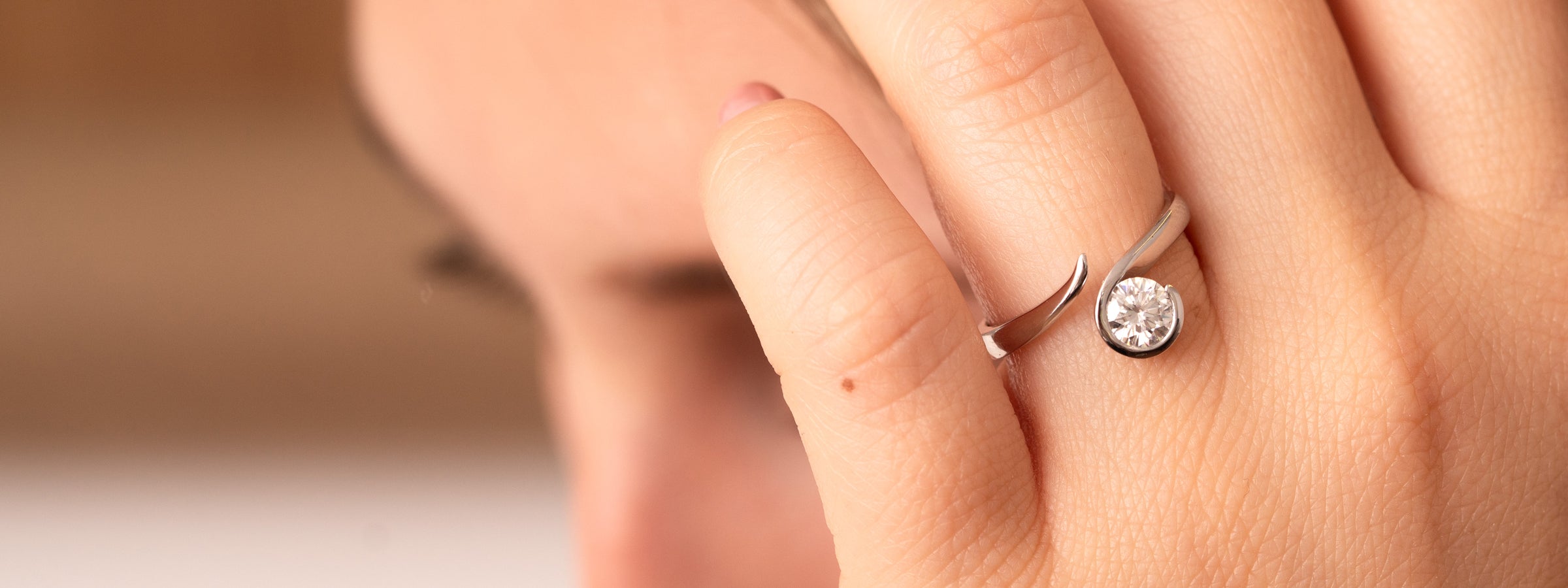
Diamantes libres de conflicto: un nuevo capítulo en la historia del lujo responsable

There’s a moment that still sticks with me from a trip I took a few years ago—a tiny boutique in Melbourne’s laneways, where the owner, a soft-spoken jeweller with magnifying glasses perched on his head, said something I’ve never forgotten: “People want beauty, but they don’t want guilt with it.”
At the time, I’d nodded politely. Now, after seeing the way conversations around ethical fashion and responsible sourcing have exploded, I realise he was years ahead of the curve.
And honestly, it’s hard not to understand why. Jewellery isn’t just decoration; it carries meaning—engagements, milestones, family stories, declarations of love. So when people discover that traditional diamond mining has a complicated and sometimes devastating history, it can cast a shadow over something that should feel joyful. That’s where the rise of diamantes libres de conflicto has reshaped the entire landscape.
Today, we’re watching a fascinating shift: diamonds are becoming as much about values as they are about sparkle.
What “conflict-free” really means (and what it doesn’t)
You might already know the broad strokes—conflict diamonds, sometimes called “blood diamonds,” were historically mined in war zones and sold to fund armed groups. The global industry was forced to confront this in the early 2000s, eventually adopting systems to reduce the flow of illicit stones.
But here’s something many people don’t realise: the standards vary wildly, and “conflict-free” as a label isn’t always as ironclad as we’d hope. It generally means a diamond hasn’t funded warfare—but it doesn’t guarantee protection of workers, sustainable environmental practices, or fair wages.
When I speak with younger buyers (and plenty of older ones, too), they tell me they want more transparency. Not a marketing slogan, but actual clarity about where their stones come from and who benefits from their purchase.
And that’s exactly why diamantes libres de conflicto grown in labs have skyrocketed in popularity. They don’t just remove the war element—they remove the entire mining component.
If you’re curious about the deeper ethical side, this guide is worth a look:
Diamantes libres de conflicto
Lab-created diamonds: not an imitation, but a revolution
Now, here’s a fun fact I find myself repeating at dinner parties: lab-grown diamonds are diamonds. Not fakes, not simulants, not some cheap alternative—they’re chemically and physically identical to mined stones.
The only thing that changes is the origin story.
Instead of drilling into the earth, shifting tonnes of soil, and dealing with all the social complications that mining can bring, scientists recreate the same natural conditions in a controlled environment. Think of it as the difference between naturally occurring snowflakes and ice made in your freezer—they’re both frozen water, just created differently.
Lab-grown options—often called man made diamonds—have also become surprisingly fashionable in the luxury world. Designers love the freedom to experiment, consumers love the ethical assurance, and investors appreciate the traceability. You can get stunning stones, including fancy colours, without relying on unpredictable geological luck.
And if you want a quick style angle, this guide on everyday jewellery pieces is surprisingly helpful:
man made diamonds
The emotional side of choosing ethically
What’s struck me over years of interviewing couples choosing engagement rings is how the emotional landscape around diamonds has changed. Twenty years ago, the conversation was almost entirely about size, sparkle, and budget. Now, values sit right alongside aesthetics.
I’ve met people who admitted they couldn’t enjoy their engagement ring until they knew—really knew—that it didn’t contribute to harm. One woman in Sydney told me she’d returned her mined diamond after reading about environmental impact because “it just didn’t feel like the story I wanted on my hand.”
There’s something incredibly powerful about that shift. A diamond ring used to be a straightforward symbol of commitment; now it’s also a symbol of conscience. Buyers want beauty and integrity, and they’re willing to ask questions that previous generations didn’t think to ask.
Environmental impact: a quieter, but equally important conversation
Most discussions around conflict-free diamonds focus on humanitarian issues, but environmental concerns are quickly becoming just as significant.
Mining isn’t a gentle activity. It often involves massive land disruption, water contamination, and serious ecosystem impacts. Even responsible mines can leave long-term scars on landscapes.
By contrast, lab-grown diamonds require far fewer resources. They’re not perfect—no manufactured product ever is—but the footprint is dramatically smaller. Some producers are now using renewable energy, pushing the concept of an “eco-luxury stone” even further.
I remember chatting with a sustainability consultant last year who said something that stuck with me: “Luxury doesn’t have to be destructive. It just has to evolve.” And that’s exactly what we’re seeing.
A new generation reshaping tradition
If you talk to jewellers across Australia—and I’ve spoken to more than I can count—you’ll hear the same thing: Gen Z and younger millennials have completely redefined the jewellery-buying experience. They research, they compare, they ask tough questions, and they’re refreshingly open to alternatives.
One Brisbane designer told me she now sells more lab-grown than mined diamonds, not because customers are trying to save money (though that’s a perk), but because they want to feel aligned with the story behind the product.
It’s an interesting cultural moment. For decades, marketing pushed the idea that “real” diamonds must be mined. But this new wave of consumers sees authenticity differently. For them, authenticity is about transparency, ethics, and personal meaning—not geological origin.
What ethical luxury looks like today
The broader fashion and lifestyle world has already embraced responsible consumption—think sustainable fabrics, cruelty-free beauty, recycled metals, and transparent supply chains. Diamonds were always going to be the next frontier.
What ethical luxury looks like today is:
• Knowing exactly where your diamond came from
• Understanding the environmental impact
• Ensuring workers weren’t exploited
• Choosing products that align with personal values
Interestingly, ethical luxury doesn’t feel self-sacrificing. People don’t see lab-grown stones as “less than”; they often feel like they’re part of something modern, progressive, and meaningful.
Jewellery has always been emotional, but now it’s also intentional.
The craftsmanship behind conflict-free diamonds
One thing I love exploring when writing about jewellery is the human side—the craftsmanship, the artistry, the quiet skill that goes into shaping a gemstone.
Whether a diamond is mined or grown in a lab, the cutting process is still done by highly trained artisans. These craftspeople decide how a raw stone becomes something breath-taking. It’s a blend of physics, patience, intuition, and decades of experience.
Some cutters I’ve interviewed say they appreciate working with lab-grown stones because they’re often more predictable in structure, allowing for bolder or more experimental cuts. You get exceptional clarity and colour without the quirks—or “character,” depending on your point of view—of naturally mined stones.
It’s a good reminder that a diamond’s beauty isn’t just about how it formed; it’s about the people who bring it to life.
Price without the pressure
Let’s talk briefly about cost—because, well, it matters. Lab-grown diamonds typically cost significantly less than mined ones of the same size and quality. And here’s what’s interesting: people aren’t flocking to them just because of affordability, but they certainly appreciate the comfort it brings.
A couple I interviewed recently said choosing a lab-grown diamond allowed them to invest more in their honeymoon. Another put the savings toward their future home. It’s not about “cheapness”; it’s about freedom.
Suddenly, ethical luxury becomes accessible without feeling like a compromise.
Why conflict-free diamonds are becoming the new normal
If you zoom out and look at the global shift, several trends stand out:
- Younger consumers prioritise values over tradition
- Sustainability is no longer niche—it’s mainstream
- Traceability tech (like blockchain certification) has improved
- Designers are embracing innovative materials
- Transparency is becoming a cultural expectation
Add these up, and it becomes clear that conflict-free diamonds aren’t a passing trend. They’re a response to a world where people want purchases that reflect who they are and what they stand for.
In a way, lab-grown diamonds represent the modern reinterpretation of luxury: beauty with accountability.
A personal note: the future feels hopeful
Whenever I finish an interview series about ethical jewellery, I’m left with a quiet sense of optimism. There’s something genuinely heartening about watching an industry once known for opacity move toward openness.
People still love diamonds—of course they do. They symbolise love, commitment, celebration, and sometimes survival. But now, those symbols aren’t burdened by the same ethical questions. They can shine brightly on their own merits.
And I think that matters deeply.
Diamonds, whether gifted or self-purchased, have a way of marking the chapters of our lives. Choosing diamantes libres de conflicto doesn’t just change the jewellery box; it changes the story we attach to it.
If you ask me, that’s one of the most beautiful evolutions we’ve seen in the world of luxury.
Final thoughts
If you’re considering buying a diamond—whether for yourself, a partner, or someone you care about—take your time, ask questions, and choose a piece that feels aligned with your values. There’s a quiet confidence that comes from knowing your sparkle didn’t come at someone else’s expense.
Ethical luxury isn’t about perfection. It’s about intention.
And it’s wonderful to see more people embracing that.